
In 1977, NASA launched the Voyager spacecraft carrying a golden record of Earth’s greatest music. Among Bach and Beethoven was one Chinese entry: a recording of the guqin piece Flowing Water, performed by the master Guan Pinghu. The choice was not accidental. The guqin is the sound of Chinese civilization itself — a continuous tradition of over three thousand years.
The Instrument #
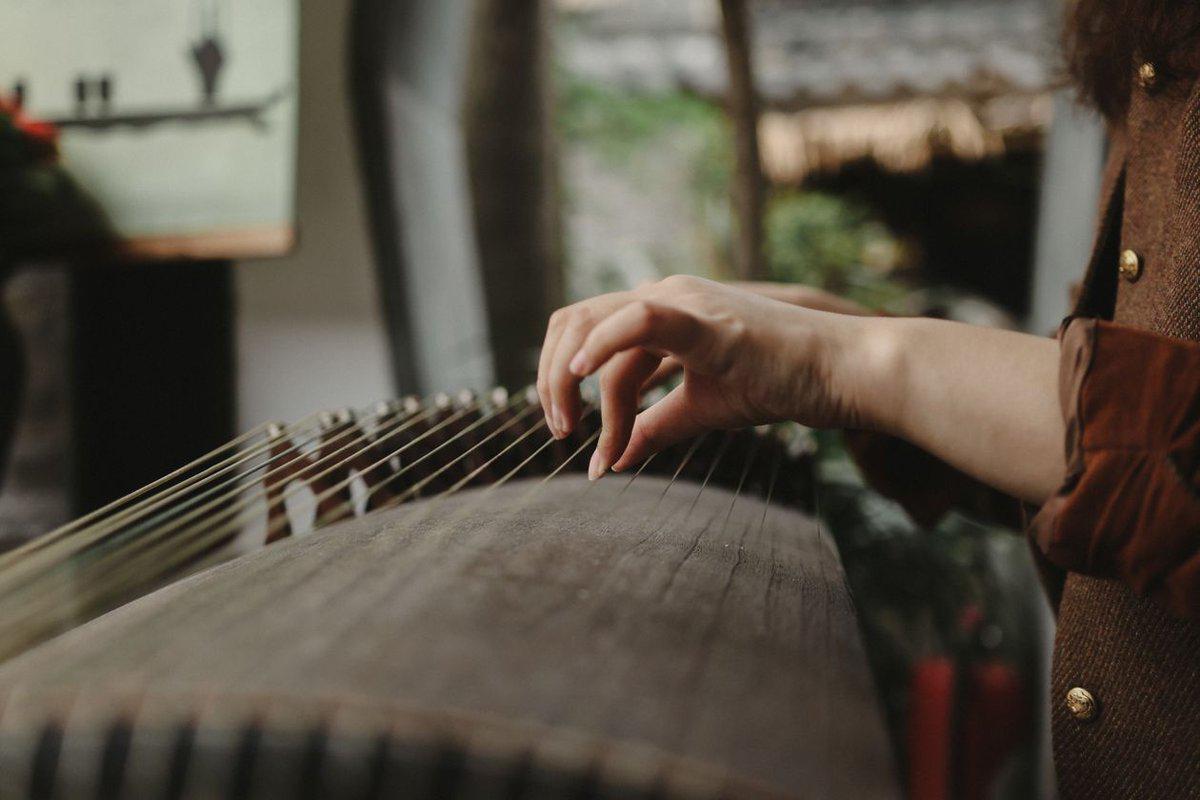
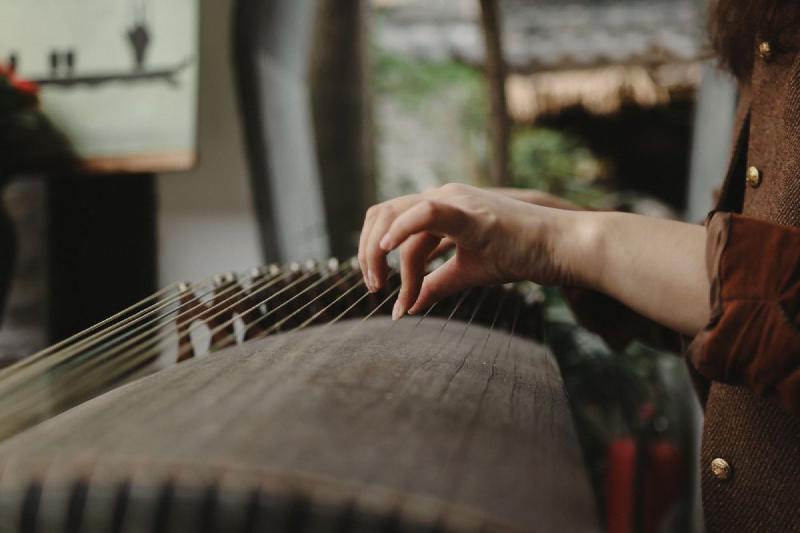
The guqin is deceptively simple: a long, narrow soundboard of paulownia wood, seven silk strings, and no frets. But within this simplicity lies extraordinary depth. The instrument has over one hundred distinct finger techniques — sliding, pressing, plucking, and harmonic touches — that produce tones from bell-like clarity to deep, meditative resonance.
Silk strings produce a warm, intimate tone that cannot fill a concert hall — and was never meant to. The guqin is not a performance instrument. It is a contemplative one, played in solitude or for a single friend. The ideal setting is a quiet room, tea, and stillness.
The Scholar’s Companion #
For two millennia, the guqin was one of the Four Arts that every cultivated Chinese gentleman was expected to master, alongside Go, calligraphy, and painting. Confucius himself was a dedicated player. The poet Xi Kang played the guqin before his execution in 262 CE, lamenting that the piece he was playing would now die with him.
The Sound of Philosophy #
Guqin music is inseparable from Chinese philosophy. The Daoist ideal of effortless action finds expression in the player’s relaxed posture. The Confucian ideal of self-cultivation is realized in the discipline of practice. The music seems to emerge from silence and return to it — each note a complete world, the spaces between notes as important as the notes themselves.